
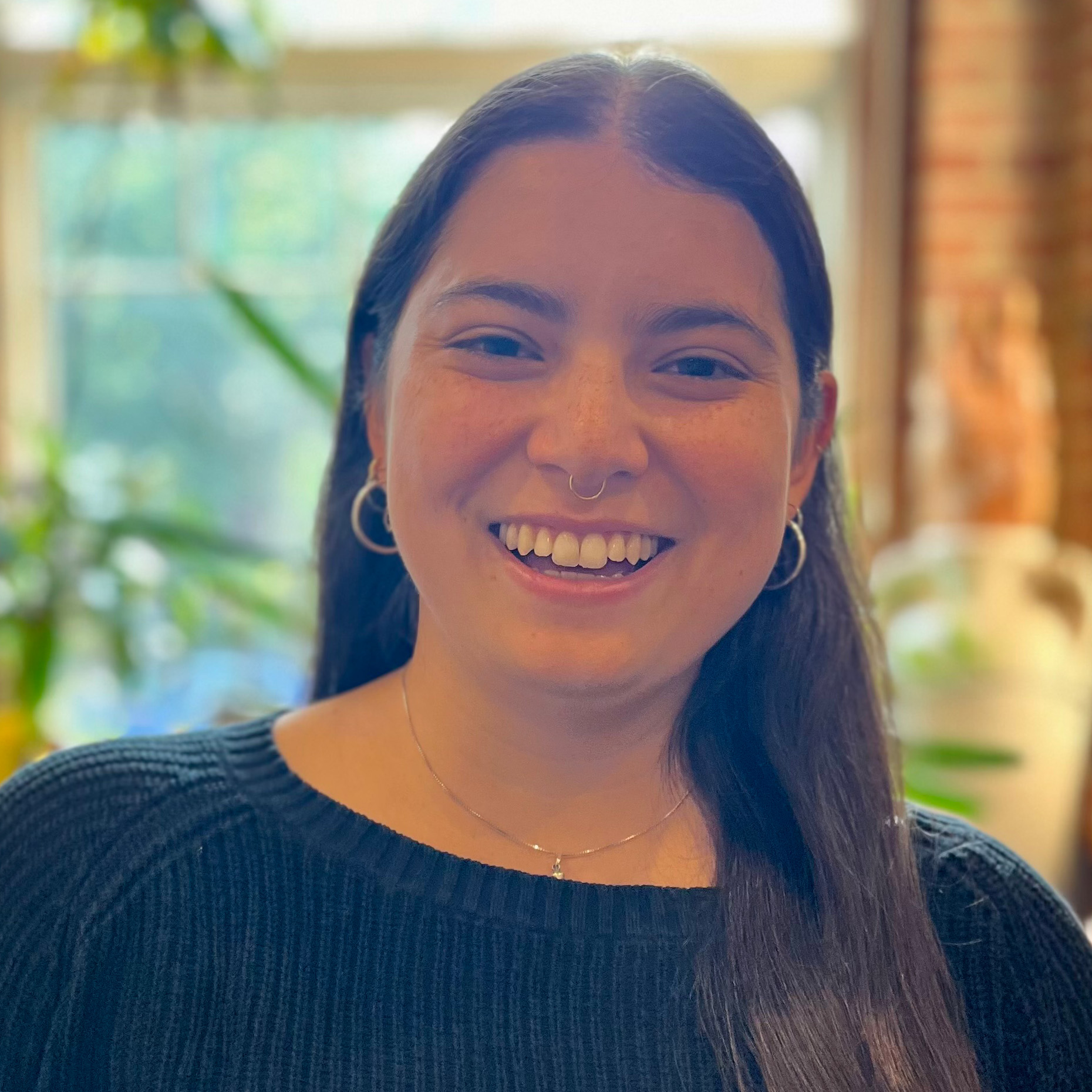
AUCD Disability Policy Fellow
For the past two years, I have served proudly as AUCD’s Public Policy Fellow. I have learned so much—from tracking the federal Congressional appropriations process to analyzing the public health policies of the executive branch and beyond, I have had the opportunity to work on fascinating projects during a challenging and unique time in our country’s history. As I reflect on my time at AUCD, there are a few experiences and lessons that I want to share.
Learning About Plain Language
When I first began my fellowship, plain language was a new concept to me. I noticed that AUCD had plain language on its website, and was excited to see that complex topics were being broken down into more accessible language. One of my main responsibilities, drafting the weekly Disability Policy News newsletter, required me to translate complex policy language into plain language. I learned how useful PL is for people with intellectual and developmental disabilities (IDD) and was guided by my colleague Liz Weintraub, AUCD’s Senior Advocacy Specialist, and our resident plain language expert. My ability to draft and structure passages in plain language evolved and changed over time, thanks to resources from the Autistic Self Advocacy Network (ASAN) and the Disability Rights Education & Defense Fund (DREDF).
Not only is plain language an important accessibility measure, but it is a tool that pushes us policy folk to dig deeper and drill down into what we are really communicating. When you are using PL, you can’t hide behind terms of art and turns of phrase—plain language requires you to define, clarify, and reveal the true meaning of policies and the ideology behind them.
Public Health and Perceptions of Disability
In the history of public health in the U.S., fears about injury and disability have been powerful enough to reanimate previously settled scientific truths, causing people to take extreme measures in misguided attempts to try and keep themselves and their families safe. As many have noted in the past few years, there is great concern that the current Department of Health and Human Services, led by Secretary Kennedy, is tapping into those fears once again. We have documented the misinformation that has come out of the agency since the beginning of the Administration, and I have learned so much about why this trend has continued and what is needed to combat it.
For centuries, public health initiatives and interventions have been met by conspiracy theories, paranoia, and fear. These reactions are often linked with the public’s fears about disabilities—early attempts to introduce vaccination and inoculation into the public sphere as early as the 1700s incited broad public panic and opposition, sparking a pattern that Americans have been repeating for decades. Now, as HHS aims to upend the childhood vaccine schedule and guidance on adult vaccinations I have learned a lot about why advocates in the disability community must speak up and inform the public about why these changes are so damaging. In particular, the concept that vaccinations can cause autism—which is untrue—has been meant to scare the public into believing fringe conspiracy theories about health and wellness. Autistic people have long experienced dehumanization and ableist treatment within the context of health and wellness conversations, often at the expense of their self-determination and independence.
I think this history is deeply reflective of human nature and so important for us to remember. In learning about these issues, I read The Panic Virus by Seth Mnookin and NeuroTribes by Steve Silberman, both of which were deeply informative and helped me understand more about the history of public health and vaccination, as well as the origins of autism research and the growth of the self-advocacy movement.
The AUCD Network and Its Historic Role
AUCD’s Network has been vital in improving information and data around disability, and has built a strong workforce of clinicians to meet the needs of people with disabilities and their families in every U.S. state and workforce.
In the late 1950s, Dr. Robert Cooke, then the Chair of Pediatrics at the Johns Hopkins School of Medicine, connected with Eunice Kennedy Shriver to establish what is now the AUCD Network. They saw that with the strong wave of deinstitutionalization that was happening during that time, the country needed a new, bigger workforce to expand community living for people with intellectual and developmental disabilities. Their work together rippled down to the creation of University Affiliated Facilities, now UCEDDs, LEND Programs, and the IDDRCs.
Daniel Armstrong, the Director of the Mailman Center for Child Development in Florida, gave remarks at a listening session in the Senate Aging Committee to educate staffers about the work of the Network. He explained that UCEDDs and LENDs—which are often housed under UCEDDs—are responsible for creating new knowledge about disability, exploring new frontiers and seeking out opportunities to innovate in the fields of research, community engagement, best practices in clinical settings, and advocacy and systems change. As Dr. Armstrong said, one of the central components of the mission of the UCEDDs is to assess the needs of the states or regions where they are located and leverage resources to help build capacity to address those needs. That is by design, he emphasized, since each UCEDD must address the unique needs of their community. The partnerships of the UCEDDs with their communities is what roots them in their work and makes them unique—as many in our Network have told me, if you’ve seen one UCEDD, you’ve seen one UCEDD.
Thank you to AUCD!
Because of this tremendous Network, I have come away from my fellowship with a new understanding of disability and a robust education in disability policy. I am so proud to have been part of the AUCD team and very grateful to be part of an exceptional community of fierce advocates pursuing true inclusion and equity for people with disabilities.
Bio: Shoshana Marin (she/her) is the Public Policy Fellow and assists the Policy Team in advocating for and implementing AUCD’s policy priorities at the federal level. Shoshana has a degree in Media and Communications from Muhlenberg College, minoring in Spanish. She previously served as Deputy Press Secretary for U.S. Senator Bob Casey (D-PA) where she led communications strategy for Senator Casey’s portfolio as Chairman of the U.S. Senate Special Committee on Aging.
Image description: Image of a smiling woman with long brown hair and a black sweater standing in front of a window.
https://www.aucd.org/staff/shoshana-marin

