
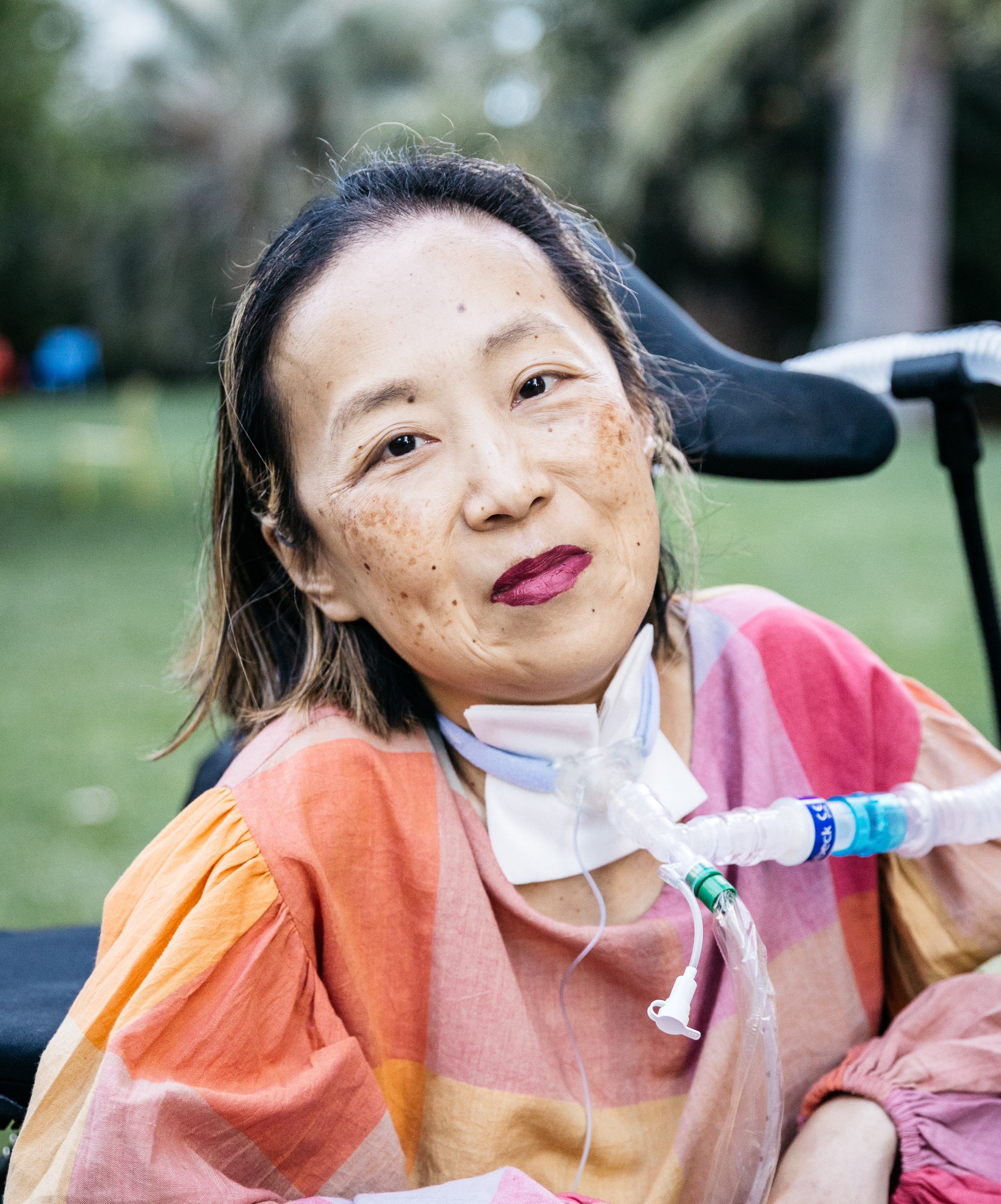
Tracy Wright, Deputy Director of Training
Maryland Center for Developmental Disabilities People On the Go Maryland
Remembering Alice Wong: A Plain-Language Blog from the Maryland Center for Developmental Disabilities (MCDD)
The Maryland Center for Developmental Disabilities (MCDD) honors and remembers Alice Wong, a nationally respected disability advocate, writer, and leader whose work helped change how people understand disability.
Alice believed that disabled people are the experts in their own lives. She worked hard to make sure disabled voices were heard, believed, and respected. At MCDD, we share that belief and are grateful for the path she helped create.
Who Alice Wong Was
Alice Wong was a disabled woman, writer, and community organizer. She lived in California and used a power wheelchair and personal care supports. Alice showed the world that having a disability does not limit leadership — it strengthens it.
She spoke honestly about disability, access, racism, caregiving, and justice. She reminded people that disability is part of human diversity and that disabled people belong in all spaces.
What She Did
Alice founded the Disability Visibility Project, which created space for disabled people to share their stories in their own words. Through this project, many people with disabilities saw themselves represented for the first time.
Alice also:
- Supported disabled writers and storytellers
- Encouraged disabled people to be involved in voting and civic life
- Edited and wrote powerful books like Disability Visibility and Year of the Tiger
Her work helped educators, healthcare providers, researchers, policymakers, families, and self-advocates better understand disability from lived experience.
Why Her Work Matters to MCDD
At MCDD, we work to improve the health, well-being, and inclusion of people with developmental disabilities across the lifespan. Alice’s work strongly reflects our values.
Alice reminded us that:
- Access is a form of care.
- Plain language helps more people participate.
- Lived experience must guide policy, research, and systems change.
Her leadership continues to influence how we think about inclusion, equity, and meaningful participation.
Honoring Alice’s Legacy
Alice Wong’s voice will continue to educate and inspire people for years to come. We honor her by continuing to:
- Listen to people with disabilities.
- Promote accessibility and inclusion.
- Support leadership by people with lived experience.
- Center respect, dignity, and community in our work.
We are grateful for Alice’s life and her lasting impact on the disability community.
Thank you, Alice Wong.
Your voice lives on in our work and our community.
Liz Weintraub, Senior Advocacy Specialist
Association of University Centers on Disabilities
This month we lost a wonderful human being. When I heard that Alice Wong passed away this month, I wanted to listen to some of her podcast and her books so I could understand what I missed about her. In this article, I will use “identity first language” because that’s what she preferred to use. She was someone who taught us that we must be the ones to tell our own stories in our own way and on our time line. As I listen to her conversation with her friend Sandy Ho about her book, “Disability Visibility,” which I enjoyed very much, Alice shared that she thought it is very difficult to be a disabled person. Alice shared that we can all be leaders in our own time. She also shared that even though we might have similar backgrounds, that doesn’t necessarily mean we have to be friends. Alice shared about when we talk to the youth and the next generation, we need to take step back and allow them to “mess around” and let them be kids. She also reminded me that we need to continue to listen to young people and let them take the lead, and we need to follow. Sandy and Alice were talking about being adults and how challenging it might be as a disabled person, but on the other hand, it can be so rewarding. Alice shared, that’s why it’s so important that disabled people share their own stories, as we are the only ones who can share them. A few years ago, I had the honor of being on her podcast, and at that time, I didn’t appreciate the knowledge that Alice could teach me. However, after learning more about her wisdom, I wish I had taken the time to learn from her.
The Rural Institute for Inclusive Communities
University of Montana
These sharings were collaboratively developed by participants of The Partnership for Inclusive Disaster Strategies’ Daily COVID-19 Disability Rights and Disasters Call.
Alice Wong’s life and work reshaped what disability solidarity and leadership look like, and her impact continues to guide us in this moment of profound loss and responsibility. Alice had empathy for disabled people who were isolated and alone and worked hard to connect them to the disability community and to people living their lives with affirmative disability identities. She was fiercely committed to building community for disabled people and supporting our integration into wider communities by uplifting our voices in all aspects of our daily lives. Long before COVID, she modeled how we all could work with one another from home using technology and innovative approaches.
Alice Wong also created a safe place for Black, Indigenous, and People of Color (BIPOC) disabled people to share their authentic experiences within the disability community. This space gave voices that were formerly shadowed by the dominant culture the light they needed to grow. She helped BIPOC disabled people to be recognized and valued. This space and the voices and stories of BIPOC disabled people need to be protected and nurtured. They have led to stronger and more helpful peer connections, enriched relationships and fuller, more authentic lives.
In 2018, Alice Wong wrote about the disproportionate impact disasters like wildfires and wildfire smoke have on disabled people in a piece titled “In California wildfires, disabled people may be left behind.” In this article, she compiled media and other reports to shine a light on the inequities that people with disabilities experience during disasters, as well as how the disability community took leadership in protection and response. She also described how the air quality warnings at the time were inadequate and needed to include actionable information such as what masking could be used by individuals with chronic illness or breathing difficulties. Since then, not much has changed, as the January 2025 wildfire in Los Angeles evidently demonstrated. This is the time we need to elevate Alice’s recommendations to support disability-led organizations like The Partnership for Inclusive Disaster Strategies before the next deadly disaster.
We should organize as a community and look towards Alice’s powerful words to change our perspectives and the direction of the disability community and its work. Consider lifting up quotes from Alice into all spaces. For example, in her 2018 article, she articulated empathy, centered our interconnectedness and humanity, and called for impactful changes with these words: “These tales pain me because I could easily be one of them, and because I know some of this suffering and death could be prevented with better infrastructure and policies.”
Alice was a fierce advocate for disability visibility, inclusion, and leadership, and we must follow her example. We can do that by naming how people with disabilities are negatively impacted by disasters, strengthening roles for disability organizations and advocates, and uplifting disabled voices in all our work.
 AUCD Policy Talk