
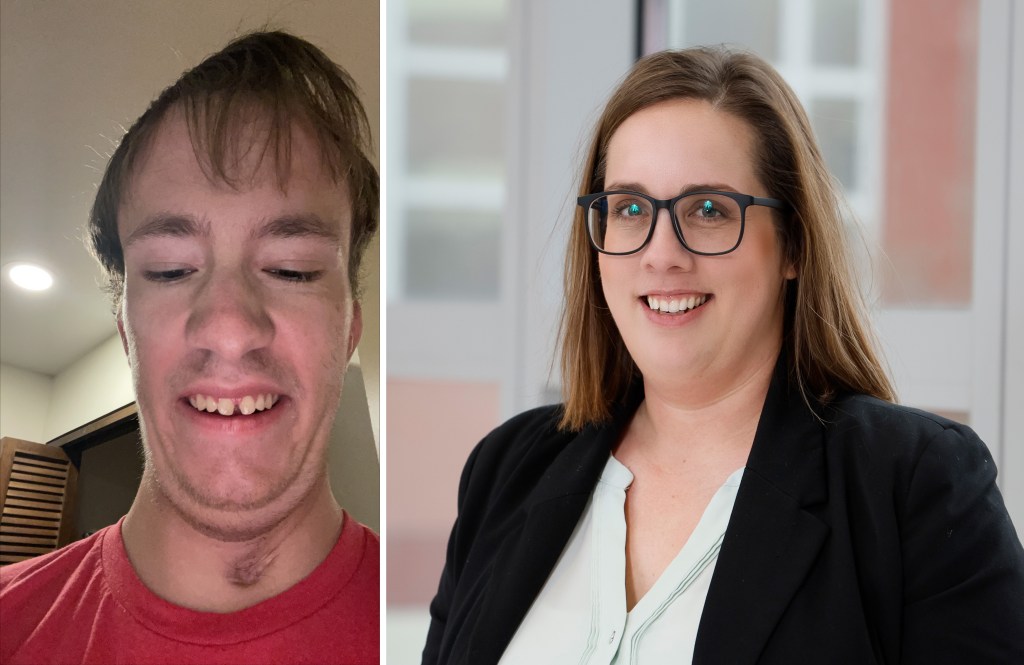
Jessie Green, Assistant Research Professor, TOPS Faculty Director at The Ohio State University
You likely have seen all the back-to-school photos, including those of students heading back to college campuses. In the US, the Higher Education Opportunity Act (HEOA) has established pathways for students with intellectual disability to attend college. The Transition in Postsecondary Settings (TOPS) program at The Ohio State University is one of 362 college programs across the US for students with intellectual disability.
My name is Evan Seufert. I am a junior in college, and I can hardly believe it, time goes by so fast. I am looking forward to becoming more independent in my junior year of college by taking more walks around campus, joining more clubs (like Church clubs), and planning social events for my peers. I live in a dorm. I have had very nice roommates!
I would consider myself a foreign newcomer except for one problem, there is no homeland where I came from. I was born Neurodiverse, which means I have a brain that is born different from other people!
I came to college because I want to make lifelong friends and find who I am in my own right. I love being myself and navigating college in contrast to my homeland that only exists in my head. I love showing others who I am! I am very creative and have a big imagination about myself and the world around me. College is awesome, and I love the people.
Engagement with peers without disabilities is required within the HEOA. Many programs have peers who serve as mentors, attend social events, or job coach.
I have joined clubs like Disability Connections! I love that group because it’s so cool and unique and I love being with my fellow non-traditional folk, and I will always care for them and say, “You being in this world makes it extra special.” My Neurodiverse friends make me feel at home. I show others who I am at college by being very kind to other people, helping others, and growing my circle of friends.
Students with intellectual disability participate in inclusive academics, career opportunities, and independent skill building.
I have taken mandatory classes, such as learning about independent living, and keeping a budget because I need to learn about budgeting to live. I also need to learn about the job world and how it works. l learn how to speak at work, and I’m pretty good at it. I took classes such as Anthropology to learn about human evolution, environmental science via the class of the same name, and an acting class, which is learning even more about how to tell a story or act in it. Having a mentor is really nice because they accommodate me and explain words I don’t understand. It was a mentor’s idea for me to record the professor’s teachings on notes because I would be sitting down for a long time. The mentors serve as my society interpreters, meaning they help me with tricky everyday school tasks.
I will have an internship at Columbus’s Center of Science and Industry, also known as COSI downtown this semester. This means I will learn a new route on our city bus, COTA. I will use my BuckID to ride the bus to and from my internship. I will have a job coach to help me learn my new internship.
This foreign mindset I have makes it harder for me to be patient with time management and simple operating polices. For example, passwords and computers are not welcoming to my mind because I forget passwords easily, and my mind screams, “I am an organic but trying to survive, and you need to work for me! Boo-hoo!” But I write my passwords down in my cell phone notes app for my solution so that I can be reminded of them.
It is important for people with intellectual disabilities to come to college because there are some things that everyone must learn to do, Neurotypical or Neurodiverse. It is also important for disabled people to be in college, because how fun would college be if we all spoke, used the same grammar, dressed, or ate in the same way all the time? College is a really good place to learn about how people do good things and grow together in a community to learn new things. It can be hard not being from a homeland with people like me, but there is a TOPS program that introduces me to everyday society!
Evan Seufert is a junior in college, from Delaware Ohio. He loves being friends with people, engaging in conversations with them, and learning about them and their interests. Evan loves going to church on Campus and being part of a very welcoming community. He loves learning about different cultures of the world and exploring new places. Evan says college is a fun but hard place for him, especially because of my intellectual disability, and because of that, he is in the TOPS Program for people with developmental disabilities. TOPS is a very fun program to be in because it has extra accommodations for people like me to help us survive in this world.
Jessie Green, Ph.D. is a research assistant professor and the LEND special education faculty member at The Ohio State University Nisonger Center. She oversees four community programs serving youth and adults with autism and intellectual disability to access their communities and postsecondary education. Jessie has research interests in community integrated employment, transition age youth, inclusive postsecondary education, and social integration. She brings leadership to both the Ohio Statewide Consortia and the Great Lakes Inclusive Postsecondary Alliance, supporting inclusive postsecondary education for students with intellectual disability. Previously, Jessie was an intervention specialist and job training coordinator in several public-school districts in Arizona and Ohio. She has a B.S. and M.Ed. in special education from Ohio State and completed her Ph.D. in educational policy. Weaving her experience in the classroom as an intervention specialist and now in research, Jessie strives to always expand opportunities for those with disabilities and their families.
 AUCD Policy Talk