
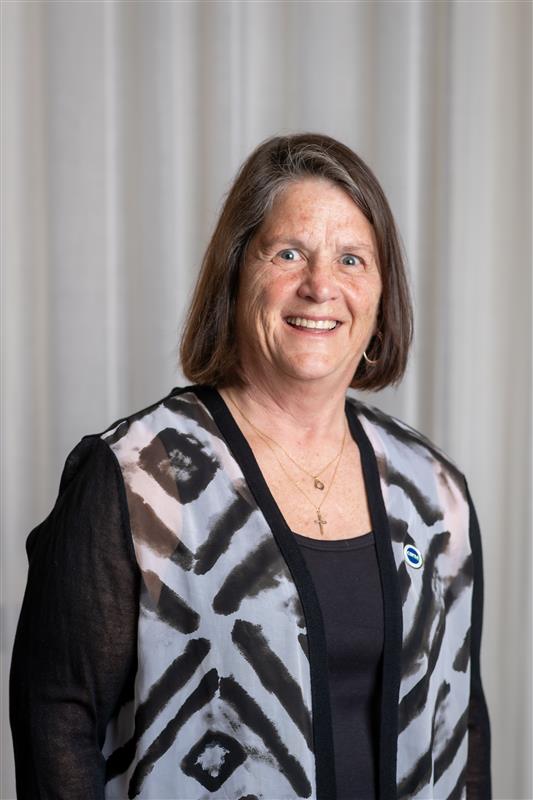
is the CEO of The Council of Parent Attorneys and Advocates, Inc.
Mills vs. Board of Education of the District of Columbia is a landmark case decided by the U.S. District Court for the District of Columbia in 1972[1]. I was 12 at the time, and the case was not on my radar! Now, however, I celebrate and remind everyone of this important case because it established the constitutional right to free appropriate public education for children with all types of disabilities, regardless of cost. The Court stated that:
“If sufficient funds are not available to finance all of the services and programs that are needed and desirable in the system, then the available funds must be expended equitably in such a manner that no child is entirely excluded from a publicly supported education consistent with his needs and ability to benefit therefrom…”
For me, the Mills case underscores the significance of parent advocacy and legal action in upholding the educational rights of children with disabilities. In fact, all of the rights we enjoy today came from individuals and families railing against the establishment. The 1960s and 1970s were decades that saw a lot of change in the fabric of our country. Recognition is due to the seven families in the Mills case who challenged an inequitable system that denied or limited their children’s access to public education in Washington, D.C. The students were excluded due to behavioral concerns, intellectual disabilities, emotional disturbances, or hyperactivity. The plaintiffs sought injunctive relief on the basis that their constitutional right to Due Process under the Fourteenth Amendment had been violated. [2] Injunctive relief is when the court orders a specific action, in this case serving students with disabilities in public school. It is also a way for courts to prevent future harm from the same or similar actions.
Peter Mills, Duane Blacksheare, George Lidell, Jr., Steven Gaston, Michael Williams, Janice King, and Jerome James were all 8-16 years old at the time. Although the named minor plaintiffs were all Black, race was not a primary factor in the case; the court certified the class (meaning that the judge allowed the seven named plaintiffs to represent a larger group of students who were similarly harmed as a “class”). The suit therefore included all District of Columbia school-age residents eligible for free public education who have been or could be excluded from access to public school. Plaintiffs estimated that at the time of the complaint, there were 22,000 such students in the D.C. Public School System, and 18,000 of those students were not being given access to a special education program as required by law.
The Court found that the District had excluded, suspended, expelled, reassigned, and transferred students with disabilities without due process. Many remained excluded from school and were on waiting lists for a long time or had never attended public school. TheJudge in the case, Joseph Cornelius Waddy, noted that public education is “a right which must be made available to all on equal terms.” He relied on the Supreme Court’s decision in Brown v. Board of Education, which also stated:
“Today, education is perhaps the most important function of state and local governments. Compulsory school attendance laws and the great expenditures for education both demonstrate our recognition of the importance of education to our democratic society. It is required in the performance of our most basic public responsibilities, even service in the armed forces. It is the very foundation of good citizenship. Today it is a principal instrument in awakening the child to cultural values, in preparing him for later professional training, and in helping him to adjust normally to his environment. In these days, it is doubtful that any child may reasonably be expected to succeed in life if he is denied the opportunity of an education. Such an opportunity, where the state has undertaken to provide it, is a right which must be made available to all on equal terms (emphasis supplied).”[3]
It is important to emphasize that, as the courts have held, education is a right that must be made available to all on equal terms. Therefore, denying or excluding a child from that education for any reason without allowing for due process of law runs afoul of the law.
This case set a precedent for laws like the Education for All Handicapped Children Act of 1975, now the Individuals with Disabilities Education Act (IDEA)[4], which guarantees rights and protection to students with disabilities and their families. IDEA requires schools to provide special education services from birth until high school graduation or age 21, with some states offering extended coverage.
As the 50th anniversary of IDEA nears, let us honor those who fought for equal rights in cases like Mills and continue to advocate for equality. We must protect these hard-won rights. We will not go back.
Denise Stile Marshall, MS is the CEO of The Council of Parent Attorneys and Advocates, Inc. (COPAA) Denise has led COPAA since 2005 and holds a Master of Science in Applied Behavioral Science from Johns Hopkins University. With over 40 years’ experience in disability support, management, and advocacy, she brings extensive non-profit association management skills and training expertise to her role. Previously, she served as Director of Training and Educational Outreach at TASH, Program Manager for Maryland Leaders in Disability Policy, and Positive Behavior Support specialist at The Kennedy Krieger Institute. Her interests include civil rights in education, positive behavioral support, reducing restraints, ending seclusion, family and self-advocacy, and experiential learning. Denise is a parent and grandparent, with personal experience advocating for student and parent rights.
[1] Mills v. Bd. Of Educ. of the District of Columbia, 348 F. Supp. 866 (D.D.C. 1972).
[2] See https://www.law.cornell.edu/constitution/amendmentxiv retrieved on July 22, 2025
[3] Brown v. Board of Education, 347 U.S. 483, 493, 74 S. Ct. 686, 691, 98 L. Ed. 873 (1954)
[4] 20 U.S.C. § 1400
 AUCD Policy Talk